Anatomy of a Character Sheet
Meet the ultimate free DnD character sheet crafted by DnD experts from CharacterHub's team. It packs everything you need for a full campaign, from core stats and skills to gear, spells, and more. It’s simple enough for newbies to follow while still having everything you need for your campaign. All in one page! Grab the blank character sheet as a fillable PDF on Google Drive for digital edits on any device. Alternatively, you can print the blank PDF or snag the PNG for a physical version that you can physically write on. Download, dive in, and get ready to conquer world
Understanding Ability Scores and Stats
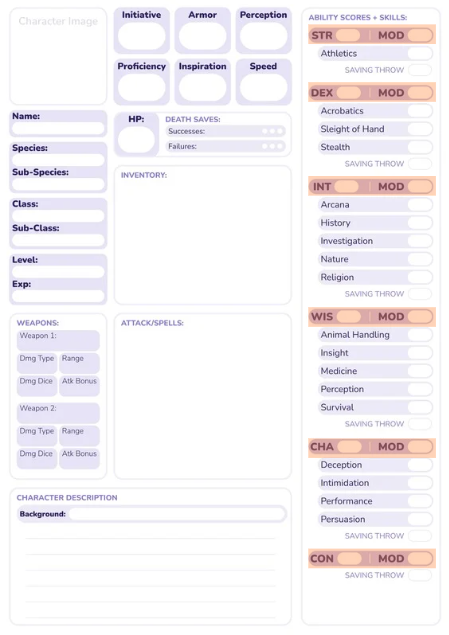
Let's talk all about ability scores. They’re highlighted in orange here. They are the base of your D&D character. There are six main ones. They are Strength, Dexterity, Constitution, Intelligence, Wisdom, and Charisma. We call them STR, DEX, CON, INT, WIS, and CHA for short.
Ability scores range from 3 to 20, where a low score like 3 or 4 means your character is notably weak in that area, struggling with related tasks like lifting heavy objects or spotting hidden dangers. A high score makes them strong. You have two main options on deciding your character’s ability scores, the first one being using dice rolls. Another option for getting your character’s ability score is using a “point buy” system that lets you spend points to pick scores. This method feels a lot like shopping for powers. It’s a fun way to match your character's vibe. Let's start with the standard array, which gives you set numbers: 15, 14, 13, 12, 10, 8. Think of them as ready-made gifts for your character. You pick where each one goes. Using the standard array, put that 15 in Strength if your fighter smashes doors, while sliding the 14 into Dexterity for a rogue who sneaks like a shadow through enemy lines. The rest fill in the spots. Add your race's bonuses last, like a cherry on top. It's super quick, so your group can jump right into the adventure. Who wants to roll dice when you can build a hero this easy?
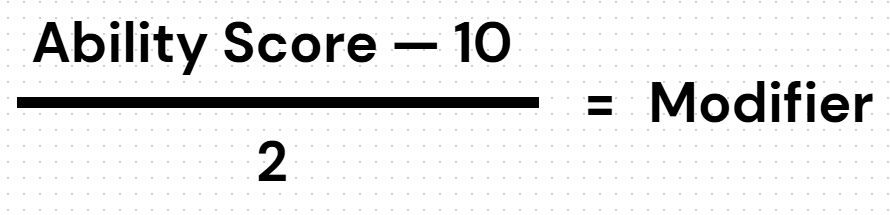
Each score gives a modifier. To calculate your modifier, first subtract 10 from your ability score, then divide the result by 2, and finally round down to the nearest whole number for use in checks and saves. (See above for a written out formula.) Round down if needed. An ability score of 14 means that the modifier will be +2, for example. When added to rolls, modifiers help with skill checks, attacks, and saves, turning raw numbers into real advantages during gameplay. Saving throws use these too. Passive Perception, which helps spot threats without active rolls, adds 10 plus your Wisdom modifier, making it a key stat for avoiding ambushes or hidden traps.
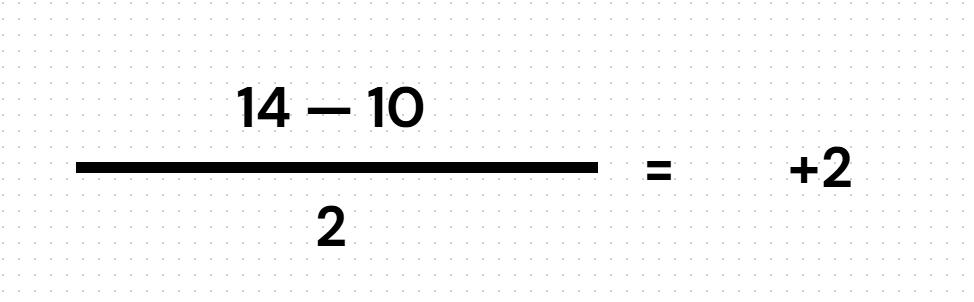
See? The math’s simple!
Skills, Proficiencies, and Equipment
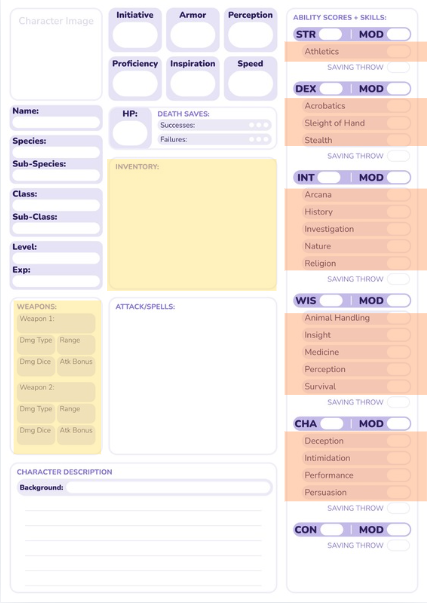
Skills determine how your character moves through the world of your game. There are 18 skills total in D&D. They cover all kinds of actions. Athletics lets you jump cliffs or wrestle foes. Acrobatics keeps you on your feet. Sleight of Hand picks pockets fast. Stealth hides you in shadows. Arcana knows magic secrets. History recalls old tales. Investigation finds clues. Nature spots plants and beasts. Religion prays with righteous devotion. Animal Handling calms horses. Insight reads lies. Medicine heals cuts. Perception spots traps. Performance wows crowds. Persuasion talks folks into deals. Sleight of Hand waits, no repeat. Survival tracks in woods. Each skill ties to a stat like Strength or Wisdom.
Proficiency boosts your skills by adding a bonus that starts at 2 for new heroes and gradually climbs as you gain levels, helping you face tougher foes with growing confidence.
Some classes take it further with expertise, which doubles your bonus for your favorite skills. A rogue might pick Stealth as their best trick. Normal proficiency gives +2, while expertise bumps it to +4. Now shadows hide you like a pro! Check the boxes on your sheet to mark these skills. Tick them off with a quick pencil. No guesswork in the middle of play.
Proficiencies stretch beyond skills too. They cover weapons like sharp swords or heavy maces, plus armor types such as chain mail. Tools like a thief's kit help pick locks in dark dungeons. Languages let you chat in Elvish with forest folk or Dwarvish with miners. Your sheet has clear spots to list them all. (They’re highlighted in orange and yellow in our sheet! The orange highlights are skills, and yellow marks inventory items and weapons.) Jot them down once and grab them fast during sessions. No more digging through old notes when the dragon roars.
The equipment grid keeps gear straight. List weapons with damage like 1d8 for a longsword. What the heck does 1d8 mean, you say? Weapons in D&D use dice to set damage. "1d8" means roll one 8-sided die. So, the number can land from 1 to 8. A longsword, like I said, deals 1d8 damage. Label it that way on your sheet. Write "Longsword: 1d8 slashing." Add your STR mod after, like 1d8 + 3.
Each weapon type rolls its own dice for damage. A dagger stabs with 1d4 piercing. That means you roll one four-sided die for sharp wounds. A club smashes for 1d4 bludgeoning. It crushes bones with a heavy thud. The shortbow fires arrows at 1d6 piercing. Picture shafts whistling through air to hit deep. A greataxe swings wild for 1d12 slashing. Its huge blade carves foes in one mighty chop. Match each weapon to its die and combat flows easy.
Armor locks in your AC to block hits. Scale mail gives 16 AC as an example, stopping blades with overlapping plates. Consumables like potions heal wounds fast, and rations keep your hero fed on long treks. Treasure lists gold coins and shiny gems from quests. Track total weight closely, though!. If you pass your carry limit, your speed will slow to a crawl. (Kinda like being overencumbered in the Fallout games!)
Core Identity: Name, Class, Level, Background, and beyond!
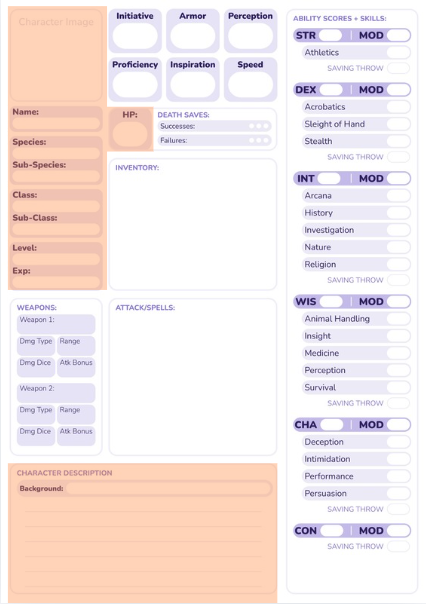
Your character's core identity starts at the top of the sheet. Everything relating to who they are as a character is highlighted in orange. You can add a photo of your character to give a visual of them. (If you’re not skilled at drawing, fear not! You can cosplay as your character or even commission another artist to draw them for you.) The name you decide on will gives your hero some soul, while class picks your role, like fighter or wizard. Level shows your power, from 1 to 20, and their background adds flavor, like soldier or sage. These fields shape who you play, and how you play.
Picture this. Your rogue carries a criminal background. Since he grew up in the shadows of shady alleys, he learned to pick locks and dodge the law. One night at the table, your rogue spots a chance to use his old tricks. The DM hands you inspiration. Now you roll with advantage to sneak past a line of guards…and the dice land high! You slip through shadows like a ghost and the party snags the treasure. Boom! The whole quest is saved.
Class powers hit hard too. Take your bard at level 3. She spent years strumming lutes in rowdy taverns. Now, spellcasting unlocks. Picture a dragon roaring in combat, fire blasts the air. Your bard steps up, plucking a note and weaving a charm spell. The beast pauses, and in a moment, its eyes glaze over. You buy time for the fighter to strike. All from one quick glance at your sheet. The class box shows your level and features clearly. No fumbling in the heat of battle!
Leveling Up and Updating Your Sheet Over Time
Leveling up feels like a power surge for your hero. Mark the class level right on top of your sheet as you climb from 1 to 20. (Some campaigns let you go over level 20, but generally for 5e, you’re capped at level 20.) Each time your character levels up, their hit points get a nifty boost. They drop when enemies land blows or traps spring. Reach zero and your hero falls down, needing rescue or death saves to get back up. Each new level lets you add more to the max hit points. This keeps pace with tougher fights ahead.
Roll your class hit die and add your Constitution modifier for the gain. Every class has its own die type based on toughness. Rogues use a d8. Grab an eight-sided die and roll it. Say you get a 6. Add your CON mod, like +2 from a score of 14 or 15. That makes 8 total hit points gained that level. Write the new max on your sheet, like from 12 up to 20. Current hit points start at that max after a long rest.
Go average for sure results with no dice luck needed. The rules set fixed numbers for each die. A d8 averages 5 since you add 1 to the true math average of 4.5. Add +2 CON mod and gain 7 hit points every level. No low rolls to hurt your build. Pencil the new max clear on the top HP line, shown as current over max like 18/25.
Barbarians soak up axes and arrows thanks to their big d12 hit die. They average 7 plus CON mod for tanky growth. Sorcerers dodge one extra blast now with more buffer from wizard d6 rolls, averaging 4 plus CON. Your character sheet tracks both the current damage taken, which reduces your hit points temporarily, and the full maximum hit points, ensuring you know exactly how much healing you need after each encounter. Update it after every fight or rest to stay sharp.
Even if you don’t level up constantly, your character sheet will definitely change over time. Your character is a reflection of your own creative process. So, just as your creativity can change over time, so too can your character! Plus, the campaign will surely weather them into a whole new person by the end of it all. So, don’t think of your character sheet as a static symbol of who your character is. Instead, it’s an ever-changing record of how your character is growing and who they are becoming.
Start Simple, Go Epic
The Role of the Character Sheet in Gameplay
Think of your character sheet like a paint palette, not a boring ol’ manual. It’s the place where your ideas mix into something full of life. Think of each section as a different color you’re working with. It may seem chaotic and confusing at first, but with skill you can paint a beautiful picture. During games, you can quickly reference your stats and make quick choices in combat, roleplay, and story moments. Over time, it starts to change, too. What began as a page of stats soon becomes a record of your character’s biggest adventures. This version of your sheet keeps that spirit alive. It’s the next step up from those plain old PDFs that just sit there, collecting digital dust.
Master the Stats Section
The stats section is where your character’s skills come to life. You can roll dice to see what numbers you get or use points to build exactly what you want. There are six key stats: Strength, Dexterity, Constitution, Intelligence, Wisdom, and Charisma. Each one covers part of who your character is, from how strong they swing a sword to how well they charm a guard. Each stat also has a bonus, called a modifier, that helps you figure out how good your character is at something. Once you understand how mods work, you’ll know when to roll big and when to play it smart.
Ability Scores Made Easy
Ability scores are the heart of your character. Each of the stats we just mentioned has a score that turns into a small bonus called a modifier. Each stat has a number called a score. From that score, you get a smaller bonus called a modifier. To find it, use this rule: take your ability score, subtract 10, then divide by 2 and round down. (In other words, Modifier = (Ability Score − 10) ÷ 2, rounded down) If you’re not a math person, no worries! There are tons of ability score calculators you can use for free online. Like this one!
Higher modifiers mean your character is better at that skill. These modifiers come up in almost every roll, saving throw, or skill check. So when your fighter swings a sword or your bard tries to persuade someone, their modifiers make the difference between success and failure.
Great Gear
Gear takes it further with tools for fight and story. Weapons list damage like longsword 1d8 slashing plus STR mod. Armor sets AC, such as chain mail at 16. Items cover potions that heal or ropes for climbs. You start with class gear, buy more with gold, or loot from wins. Proficiencies let you use them right, like simple weapons for all or martial for fighters. Track in yellow inventory spots with weight to avoid slow speed. In action, a bow attack rolls d20 plus DEX to hit, then 1d8 damage. Roleplay shines when a healer's kit aids Medicine checks. Sheet keeps it all ready so you grab and go.
You typically snag starting gear from your class kit, like a wizard's spellbook and dagger. Gold from quests buys upgrades at town shops. Loot fallen orcs for their axes. Proficiencies greenlight the best stuff. Everyone handles simple weapons like daggers or staffs. Fighters master martial ones like longswords or longbows. Track all in yellow inventory spots. Add weight totals. Pass STR times 15 or speed drops to a crawl.
In action, grab a bow attack. Roll d20 plus DEX mod and proficiency to hit. Total beats enemy AC? Then roll 1d8 damage. Roleplay pops when a healer's kit boosts your Medicine check to stitch wounds mid-talk. Your sheet lines it up so you can charge into glory.
How to Keep It All Organized and Accessible During Sessions
Sharing Your Character Online or with Your Party
Your character deserves an audience. You can export as PDF for edits or PNG for clean shares. Toss in a QR code if you use physical notes. It points to your full character sheet instantly. Friends scan with their phone and dive into your world, lore, and cast of characters. Quick and slick every time. Perfect for last-second prep before dice roll!
Try Social Spaces on CharacterHub for team fun. You can create a custom chatroom just for you and your party! Share character profiles, worldbuilding info, or whatever you can imagine in your social space. Pals react with likes or drop ideas for your wizard's next spell. It sparks talks that amp the table. Need changes mid-plan? Share a Google Sheets link. Everyone tweaks levels or loot as you chat. Collab magic happens at CharacterHub!
Reading Your Sheet in the Heat of Combat
Combat hits fast in D&D. Think of your sheet as a combat dashboard. You need to truly get to know your sheet before the tough stuff begins. Learn to be able to find what you’re looking for in an instant. Key parts like HP, AC, and attacks sit front and center. Glance there first to stay sharp.
Pre-mark key stats before battle if you need to. Circle attack bonuses, damage dice, AC, HP, initiative mod, and spell DCs. No hunting mid-turn now!
On your turn, follow these steps from the sheet. Check initiative order. Move your speed, say 30 feet. Pick an attack from the list. In combat, you roll a d20 and add your relevant ability mods plus proficiency if applicable, aiming to beat the foe's Armor Class (AC) so your attack lands successfully. Roll damage dice next. Use bonus action or reaction if you’re ready and able to. Then, your turn is done-zo.
As damage occurs during fights or from traps, mark HP drops right away on your sheet to track your current health accurately and avoid forgetting in the heat of battle. Note conditions like poisoned or prone. Track limited uses such as rages or spells left. These habits keep you alive for longer! (Plus, you can save your death saves for real emergencies instead of silly mistakes!)
Attacks show you all the info you need. Attacks follow a standard shorthand: Weapon/Spell Name | To Hit | Damage/Type | (Notes). So, on your sheet, it may say something like "Longsword: d20 + 5 to hit, 1d8 + 3 slashing." Read it twice if you need to before rolling. Just because battles can be fast paced at times doesn’t mean you need to rush your turn! Think carefully about your next move before proceeding to get the best outcomes for your character. (And your campaign!)
Team Up with CharacterHub
How CharacterHub Makes Character Tracking a Breeze
Imagine waving goodbye to paper chaos. CharacterHub acts like a trusty sidekick for campaign managing, worldbuilding, and lore creation. One quick click uploads your sheet. It auto-fills stats, skills, and gear into interactive character profiles. You get instant access anytime. But it doesn’t end there! You can create entire worlds on CharacterHub, where you can link characters to it. Plus, you can track and manage character’s relationships to each other over time. What a smooth way to prep adventures!
Tons of space waits for your heroes. Store every character with rich lore. Add the worlds they roam, full of towns and dragons, and connect your characters to that world. You can track their relationships, timelines, and more all on their profiles. Custom sections add your flair and make it truly yours. Your character info will be stored neatly and easily in their profile. And most of all, easy to reference and share!
Craft Killer Backstories
CharacterHub makes crafting backstories a joy. The basic character profile template gives you all you need to succeed, but you can push it much farther by using custom sections, or customizing which sections appear. Plus, you can customize everything about your character’s profile, all the way down to if the sections are displayed in one or two columns! You can make it as intricate or as simple as you please. You can use your character profile as a place to store all the character’s super deep lore, and keep the basics on the sheet. For example, a character may be simply listed as an "Orphan thief" on their sheet. But on Characterhub, their profile can have tons of details about street fights that built their Athletics skill. Flesh out family ties or betrayals. Your hero leaps off the page with ties to their CON save or Persuasion rolls.
Timelines track it all in order. Note the raid that orphaned them at age 10. Relationships map out a crime boss mentor or hated guard captain. See how past choices shape current features like Sneak Attack. It grows your backstory without mess.
Voice notes add heart. Hear the rogue growl their oath of revenge. (Or, if you’re not into voice acting, you can just verbally describe your character instead of putting it into text. Do what works for you and you’ll have the best results!) Images show alley scars or stolen heirlooms. Mood boards collect dark cloaks and dagger sketches. What starts as a basic profile becomes a vendetta saga. DMs spot plot hooks easy. Party bonds over the depth. Play feels personal from turn one.
Worldbuilding Galore and More!
Ever feel like your D&D world needs more meat on its bones? CharacterHub opens the gates to worldbuilding wonders you can shape yourself. Link your hero straight to custom worlds you shape. Add maps that wind through dark forests or deep caves. Build networks of NPCs like sneaky merchants or brave guards.
Your lore ties tight and grows with every game. A thief's old rival can show up years later for revenge, for example. Maps shift as kingdoms fall. Each session can change the world in some way.
Jump into community remix tools for extra spark. Team up with friends to craft shared worlds. Borrow a cool dragon or magic sword for your one-shot night. Adopt a new OC, or sell an old one. (You can trade OCs as well! All of this is possible on the built-in marketplace.) Ideas mix and catch fire fast, all fueled by your creative spark.
Export full packs with stats, lore, and art. Send PDFs to your DM or CharacterHub links to the party. Social spaces share all the campaign buzz too. Watch your realms come alive together!
From Sheet to Adventure
The Next Level Awaits You
Think of your character sheet as a map to epic nights. Stats fuel fights. Skills open doors. Gear arms your quest. You hold the key now, with all these resources in your back pocket, and a super awesome character sheet to fill out. Let us cheer your sheet mastery together!
New to D&D? Build one hero first. Use a standard array for stats. Join a kind group that’s beginner friendly. Or, make one yourself! (Pssst…a great place to find fellow DnD lovers to play with is CharacterHub! We have 500k+ artists in our community who are ready to welcome you in!) Watch other people play through campaigns to pick up on new skills. Your turn will come quickly, so get ready!
If you’re a seasoned player, it’s about time to revisit old sheets. Add fresh feats. Blend classes for wild builds. Teach newbies your tricks. (Or better yet, get the better of them during a campaign to show them their weak spots!)
Dice sit ready. Stories unfold. Your journey begins here and now.
Grow with CharacterHub
Want to take your D&D game to wild new heights? Grow with CharacterHub, the ultimate sidekick for characters that live forever. Head over to characterhub.com and sign up free today.
Upload sheets with one click. Watch stats and lore bloom into profiles that breathe. Track every twist from backstories to world maps. Share with your party in social spaces. Your heroes evolve as you play. What will you build first?

Scarlett Bittle
With a pencil as her magic wand, Scarlett Bittle aims to spread the magic of creation to the world. She’s a multimedia artist, with experience experimenting with a spectacular spectrum of mediums. If you’re drawn to see more of her work, check it out on her instagram.
Find Out More.jpg)
.jpg)